• New
AHK-Cu
  • AHK-Cu
  • AHK-Cu

AHK-Cu

AHK50

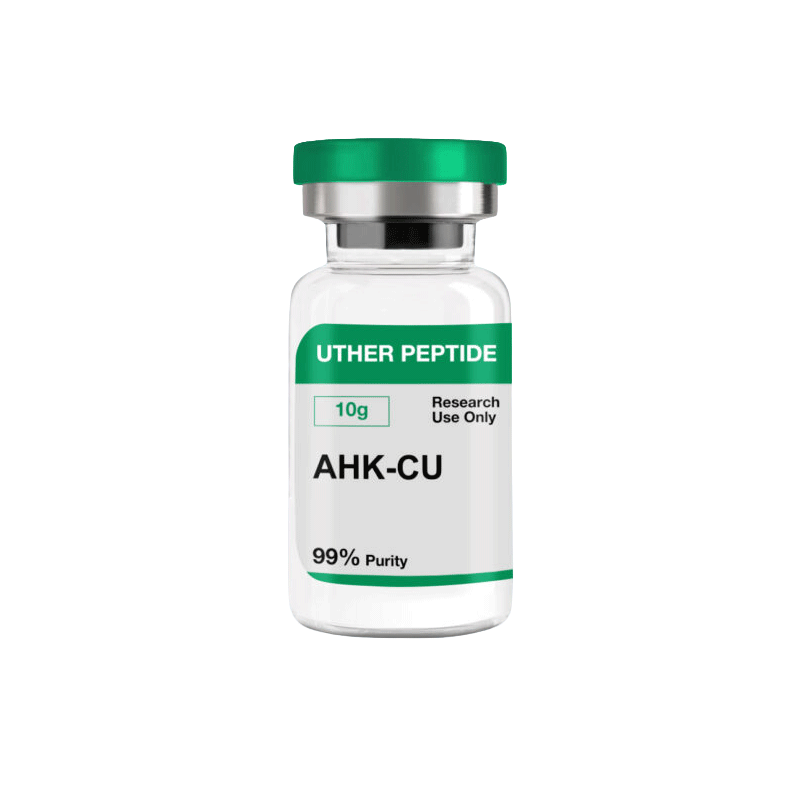
AHK-Cu is a copper-binding research tripeptide (Copper Tripeptide-3) studied in vitro for copper-dependent cell signalling, dermal papilla cell proliferation, and hair-follicle biology.

  • Batch tested Purity: ≥ 98.5 % (HPLC, typical)
  • CAS Number: 682809-81-0
  • Molecular Formula: C₅H₅CuN₆O₄
  • Amino Acid Sequence: Ala-His-Lys (AHK), copper(II) complex

The products offered on this website are furnished for in-vitro studies only. In-vitro studies are performed outside of the body. These products are not medicines or drugs and have not been approved to prevent, treat or cure any medical condition, ailment or disease. Bodily introduction of any kind into humans or animals is strictly forbidden. 

Strength
£14.90
VAT included
Quantity
1000 Items

  Cut off Times

Order before 15:00 for same day dispatch

  Delivery policy

Royal Mail Tracked 24

  Return policy

Moneyback guarantee

Description

Synonyms / Designations: GHK-Cu, Copper Tripeptide-1, Glycyl-L-histidyl-L-lysine copper complex
CAS Number: 49557-75-7
Molecular Formula: C15H24CuN6O4
Molecular Weight: 415.94 g/mol
Purity: ≥ 99 % (HPLC)
Appearance: Blue to deep blue lyophilised powder
Pack Size: 50 mg (total)
Storage: Desiccated, protected from light, stored at –20 °C or below
Solubility: Water and buffered aqueous solutions; limited solubility in organic solvents.

Description & Mechanism

GHK-Cu is a naturally occurring copper–peptide complex that functions as an endogenous signalling molecule involved in metal ion transport and cellular regulation. It consists of the tripeptide glycyl-L-histidyl-L-lysine complexed with a divalent copper ion, forming a high-affinity chelate that facilitates controlled copper delivery within biological systems. In biochemical and cellular research settings, GHK-Cu modulates cellular signalling processes through both peptide-mediated interactions and copper-dependent biochemical activity.

Copper is an essential trace element required for numerous enzymatic and structural proteins involved in redox balance, extracellular matrix organisation, and cellular metabolism. By acting as a carrier and regulator of bioavailable copper, GHK-Cu plays a role in maintaining metal homeostasis and influencing downstream pathways linked to cellular growth, differentiation, and tissue remodelling.

In preclinical research models, exposure to GHK-Cu has been associated with altered gene expression patterns and modulation of signalling pathways related to extracellular matrix dynamics, oxidative stress response, and cellular turnover. These effects are context-dependent and vary with concentration, exposure duration, and experimental system, making GHK-Cu a widely used molecular tool for investigating copper-mediated signalling and peptide–metal interactions in vitro and in vivo.

Applications in Research
  • As a molecular probe to study copper transport, binding, and homeostasis in biological systems.
  • To investigate copper-dependent signalling pathways involved in cellular growth, differentiation, and tissue remodelling.
  • In cell-based assays examining changes in gene expression, redox-sensitive signalling, and extracellular matrix regulation.
  • In animal or ex vivo experimental models for mechanistic investigation of peptide–metal interactions, copper bioavailability, and metal-mediated tissue signalling processes.

Specifications Summary

Parameter Typical Value / Range
Purity (HPLC) ≥ 99
Appearance Blue to deep blue lyophilised powder
Molecular Weight 415.94 g/mol
Compound Type Copper-binding tripeptide
Solubility Water, dilute acids, DMSO
Storage –20 °C, desiccated, dark
Pack Size 3,000 mg (bulk)

Handling, Reconstitution & Stability

  • Weigh under inert/dry conditions; avoid moisture uptake.
  • Avoid metal-chelating agents (e.g. EDTA) or buffers that may disrupt copper coordination.
  • For stock solutions, dissolve in sterile water or appropriate buffered aqueous solution depending on assay requirements.
  • Filter sterilize if needed (e.g. 0.22 µm) immediately prior to use.
  • Aliquot and store stock solutions at –20 °C (or lower) to avoid repeated freeze–thaw.
  • Monitor for precipitation or pH shifts before use in sensitive assays.

Precautions & Notes 

  • GHK-Cu activity is concentration-dependent; perform appropriate dose–response controls.
  • Copper coordination may be affected by pH, ionic strength, and chelating agents.
  • Light exposure and prolonged aqueous storage may reduce stability.
  • Intended strictly for laboratory research use; not for human or veterinary application.

References

  1. Pickart, L. R., & Thaler, M. M. (1973). “Tripeptide in human plasma that prolongs survival of normal liver cells and stimulates growth in neoplastic liver.” Nature New Biology, 243(124), 85–87. https://doi.org/10.1038/newbio243085a0
  2. Pickart, L., Margolina, A. (2018). “GHK-Cu may prevent oxidative stress in skin by regulating copper and antioxidant gene expression.” Oxidative Medicine and Cellular Longevity, 2018, Article ID 3235918. https://doi.org/10.1155/2018/3235918
  3. Hong, Y., He, H., Jiang, C., et al. (2019). “Copper peptide GHK-Cu stimulates proliferation and expression of growth factors in human hair dermal papilla cells.” Molecules, 24(20), 3692. https://doi.org/10.3390/molecules24203692
  4. Pickart, L. (2008). “The human tri-peptide GHK and tissue remodeling.” Journal of Biomaterials Science, Polymer Edition, 19(8), 969–988. https://doi.org/10.1163/156856208784909345

Keywords: GHK-CU, GHK, GHKCU, Copper Peptide.

Product Details
AHK50
1000 Items
Comments (0)
Grade
No customer reviews for the moment.
4 other products in the same category:
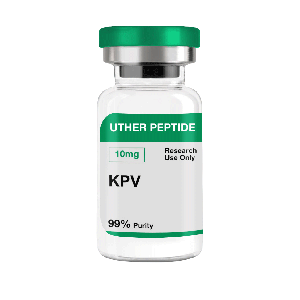
New KPV KPV

Reference: KPV10

KPV

(0)
KPV is a tripeptide studied for its anti-inflammatory and immune-modulating properties. Used in vitro, it offers research potential in inflammation regulation, gut health, and skin regeneration, making it a valuable tool for immunology studies. Molecular Formula: C₁₆H₃₀N₄O₄ Molecular Weight: 384.48 g/mol Purity: 99% Sequence: Lys-Pro-Val The products...
£19.90
More KPV
In stock
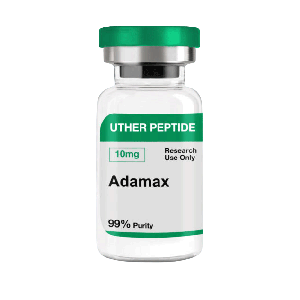
New Adamax 10mg Adamax 10mg

Adamax 10mg

(0)
Adamax is a synthetic peptide developed for experimental investigation of melanocortin receptor–mediated signalling, particularly within pathways associated with neuroendocrine and central nervous system research models. Batch tested Purity: ≥ 99 % (HPLC / SEC, typical) CAS Number:  153931-84-9 Peptide Type: Synthetic melanocortin-related peptide...
£29.00
More Adamax 10mg
In stock
New GHRP-6 GHRP-6

Reference: GHRP6

GHRP-6

(0)
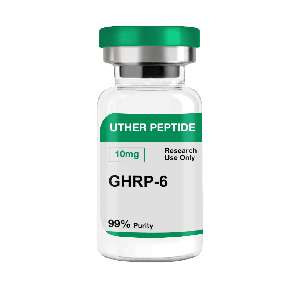
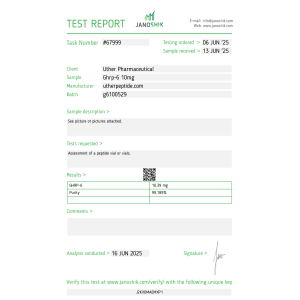
GHRP-6 is a specialised research peptide developed for advanced scientific exploration of receptor-mediated signalling and neuroendocrine regulation within growth hormone secretagogue pathways. Batch tested Purity: ≥ 98.5 % (HPLC, typical) CAS Number: 87616-84-0 Molecular Formula: C₄₆H₅₆N₁₂O₆ Amino Acid Sequence: His-D-Trp-Ala-Trp-D-Phe-Lys-NH2...
£9.99
More GHRP-6
In stock
New Abaloparatide 3mg Abaloparatide 3mg

Reference: ABA3

Abaloparatide 3mg

(0)
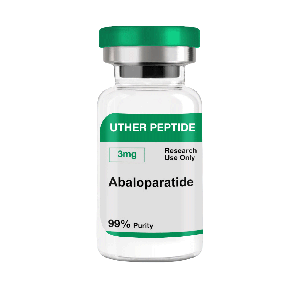
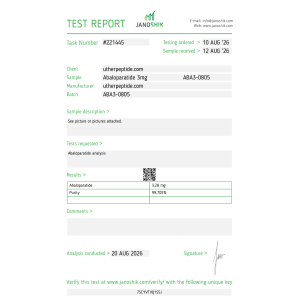
Abaloparatide is a selective parathyroid hormone-related peptide analog studied for its anabolic effects on bone. Research highlights its potential in promoting bone growth, improving mineral density, reducing fracture risk, and supporting skeletal health in experimental models. The products offered on this website are furnished for in-vitro studies only....
£29.90
More Abaloparatide 3mg
In stock

Follow us on Facebook