- New
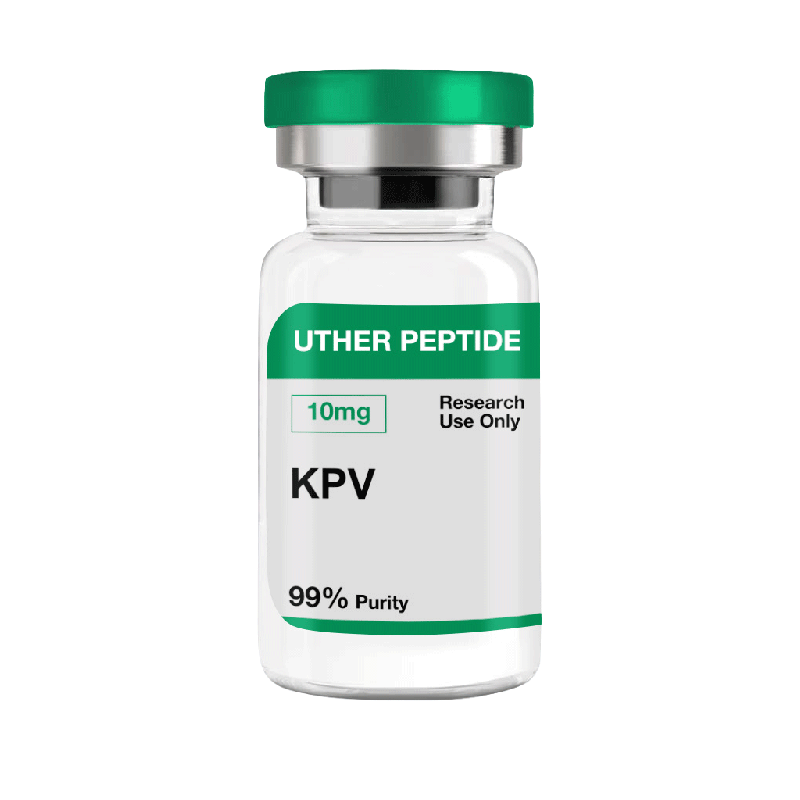
KPV is a tripeptide studied for its anti-inflammatory and immune-modulating properties. Used in vitro, it offers research potential in inflammation regulation, gut health, and skin regeneration, making it a valuable tool for immunology studies.
The products offered on this website are furnished for in-vitro studies only. In-vitro studies are performed outside of the body. These products are not medicines or drugs and have not been approved to prevent, treat or cure any medical condition, ailment or disease. Bodily introduction of any kind into humans or animals is strictly forbidden.
 Cut off Times
Order before 15:00 for same day dispatch
 Delivery policy
Royal Mail Tracked 24
 Return policy
Moneyback guarantee
Synonyms / Designations: KPV, Lys–Pro–Val, α-MSH (11–13), α-Melanocyte-Stimulating Hormone fragment
CAS Number: 67727-97-3
Molecular Formula: C15H26N4O4
Molar Weight: ~342.43 g/mol
Peptide Sequence: Lys–Pro–Val
Peptide Classification: Synthetic tripeptide; α-MSH–derived fragment
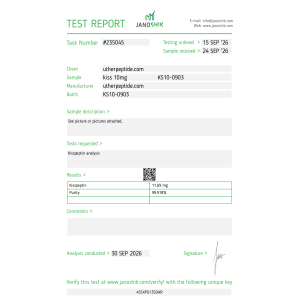
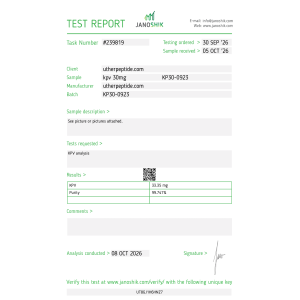
Purity: ≥ 99 % (HPLC, typical)
Appearance: White to off-white lyophilised powder
Pack Size: 10 mg (typical)
Storage: Desiccated, protected from light, stored at –20 °C
Solubility: Soluble in sterile water and buffered aqueous solutions
KPV is a synthetic tripeptide corresponding to amino acids 11–13 of α-melanocyte-stimulating hormone (α-MSH). It represents the minimal bioactive fragment commonly utilised in research settings to investigate melanocortin-associated signalling independently of the full-length peptide.
In biochemical and cellular research systems, KPV has been studied for its interactions with melanocortin-related pathways and downstream intracellular signalling mechanisms associated with immune modulation and inflammatory responses. Experimental studies typically examine receptor-independent and receptor-associated signalling effects, transcriptional responses, and peptide stability under controlled conditions. Observed molecular responses are dependent on experimental design, concentration, and model system, and are used to explore peptide-mediated signalling rather than defined biological or physiological outcomes.
Purity: ≥ 99 %
Appearance: White to off-white lyophilised powder
Peptide Type: Synthetic α-MSH–derived tripeptide
Molar Weight: ~342.43 g/mol
Solubility: Water, buffered aqueous solutions
Storage: –20 °C, desiccated, protected from light
Pack Size: 10 mg
Catania A. et al. The neuroimmunomodulatory role of melanocortins. Endocrine Reviews, 2004.
https://pubmed.ncbi.nlm.nih.gov/15082519/
Lipton J.M., Catania A. Anti-inflammatory actions of the neuroimmunomodulator α-MSH. Immunology Today, 1997.
https://pubmed.ncbi.nlm.nih.gov/9368769/
Brzoska T. et al. α-MSH peptides and their receptors: biological functions. Journal of Endocrinology, 2008.
https://pubmed.ncbi.nlm.nih.gov/18334621/
Schiller P.W. et al. Structure–activity relationships of melanocortin peptides and fragments. Annals of the New York Academy of Sciences.
https://pubmed.ncbi.nlm.nih.gov/9463824/
Getting S.J. et al. The melanocortin peptide KPV inhibits inflammatory signalling pathways independently of classical melanocortin receptors. Journal of Immunology.
https://pubmed.ncbi.nlm.nih.gov/12421969/
Patel H.B. et al. Anti-inflammatory effects of melanocortin peptides and minimal active fragments. British Journal of Pharmacology.
https://pubmed.ncbi.nlm.nih.gov/16783407/
PubChem. Lys–Pro–Val (KPV) peptide compound summary.
https://pubchem.ncbi.nlm.nih.gov/compound/Lys-Pro-Val
Keywords: KPV, Lys–Pro–Val, α-MSH Fragment, Melanocortin Peptide, Synthetic Tripeptide, Peptide Signalling Research
Your review appreciation cannot be sent
Report comment
Report sent
Your report cannot be sent
Write your review
Review sent
Your review cannot be sent
Reference: COREB45
Reference: IPA10
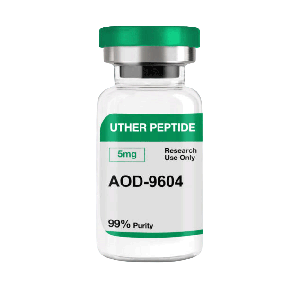
Reference: AOD5
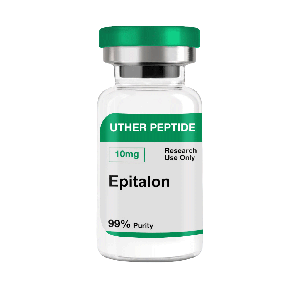
Reference: EPITH10
KPV is a tripeptide studied for its anti-inflammatory and immune-modulating properties. Used in vitro, it offers research potential in inflammation regulation, gut health, and skin regeneration, making it a valuable tool for immunology studies.
The products offered on this website are furnished for in-vitro studies only. In-vitro studies are performed outside of the body. These products are not medicines or drugs and have not been approved to prevent, treat or cure any medical condition, ailment or disease. Bodily introduction of any kind into humans or animals is strictly forbidden.
check_circle
check_circle