- New
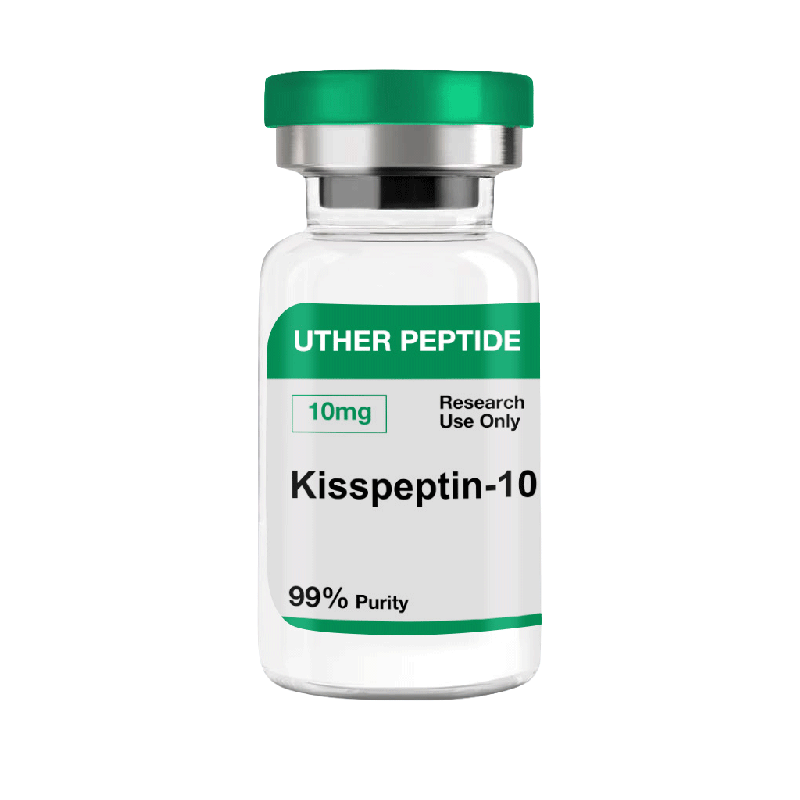
Kisspeptin-10, a neuropeptide regulating GnRH release, is central to reproductive function research. Studied for roles in fertility, puberty onset, and sexual health, it also provides insights into hormone therapy, reproductive medicine, and the metabolic–reproductive link in experimental models.
The products offered on this website are furnished for in-vitro studies only. In-vitro studies are performed outside of the body. These products are not medicines or drugs and have not been approved to prevent, treat or cure any medical condition, ailment or disease. Bodily introduction of any kind into humans or animals is strictly forbidden.
 Cut off Times
Order before 15:00 for same day dispatch
 Delivery policy
Royal Mail Tracked 24
 Return policy
Moneyback guarantee
Synonyms / Designations: Kisspeptin-10, Metastin (10-10), KiSS-1–derived decapeptide, KISS1 receptor ligand fragment
CAS Number: 374675-21-5
Molecular Formula: C63H83N17O14
Molecular Weight: ~1302.4 g/mol
Peptide Classification: Synthetic decapeptide; KISS1-derived neuropeptide fragment
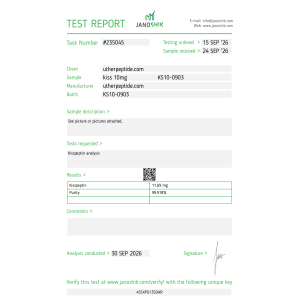
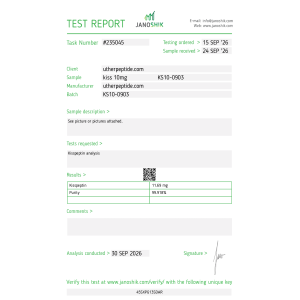
Purity: ≥ 99 % (HPLC, typical)
Appearance: White to off-white lyophilised powder
Pack Size: 10 mg (total)
Storage: Desiccated, protected from light, stored at –20 °C
Solubility: Soluble in sterile water and buffered aqueous solutions
Kisspeptin-10 is a synthetic decapeptide corresponding to the C-terminal region of the endogenous KiSS-1 gene product. It represents the minimal bioactive fragment commonly used in research settings to study kisspeptin-mediated signalling independent of longer precursor peptides.
In biochemical and cellular research systems, Kisspeptin-10 interacts with the KISS1 receptor (also known as GPR54), a G-protein-coupled receptor expressed in hypothalamic and peripheral tissues. Experimental studies investigate receptor binding, downstream signalling cascades, and neuroendocrine pathway activation under controlled conditions. Observed molecular responses are dependent on experimental design, concentration, and model system, and are used to examine receptor-mediated signalling rather than defined physiological or clinical outcomes.
| Parameter | Typical Value / Range |
|---|---|
| Purity (HPLC) | ≥ 99 % |
| Appearance | White to off-white lyophilised powder |
| Molecular Weight | ~1,302.4 g/mol |
| Peptide Type | Synthetic KISS1-derived decapeptide |
| Solubility | Water, buffered aqueous solutions |
| Storage | –20 °C, desiccated, dark |
| Pack Size | 10 mg |
Kotani M. et al. The metastasis suppressor gene KiSS-1 encodes kisspeptins, the natural ligands of the orphan G protein-coupled receptor GPR54. Journal of Biological Chemistry, 2001.
https://pubmed.ncbi.nlm.nih.gov/11451936/
Seminara S.B. et al. The GPR54 gene as a regulator of puberty. New England Journal of Medicine, 2003.
https://pubmed.ncbi.nlm.nih.gov/12571259/
Dhillo W.S. et al. Kisspeptin-54 stimulates the hypothalamic-pituitary-gonadal axis in human males. Journal of Clinical Endocrinology & Metabolism, 2005.
https://pubmed.ncbi.nlm.nih.gov/15998775/
Pinilla L. et al. Kisspeptins and reproduction: physiological roles and regulatory mechanisms. Physiological Reviews, 2012.
https://pubmed.ncbi.nlm.nih.gov/22396373/
Keywords: Kisspeptin-10, Metastin, KISS1 Peptide, GPR54 Ligand, Synthetic Neuropeptide
Your review appreciation cannot be sent
Report comment
Report sent
Your report cannot be sent
Write your review
Review sent
Your review cannot be sent
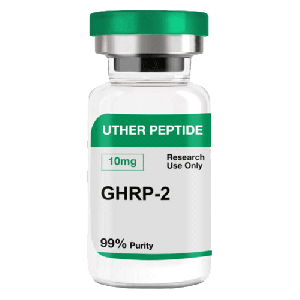
Reference: GHRP2
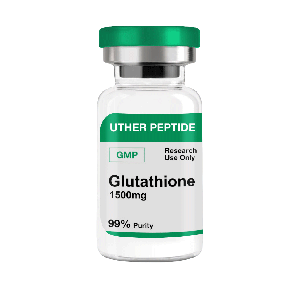
Reference: GLUT1500
Reference: KPV10
Reference: 51MQ10
Kisspeptin-10, a neuropeptide regulating GnRH release, is central to reproductive function research. Studied for roles in fertility, puberty onset, and sexual health, it also provides insights into hormone therapy, reproductive medicine, and the metabolic–reproductive link in experimental models.
The products offered on this website are furnished for in-vitro studies only. In-vitro studies are performed outside of the body. These products are not medicines or drugs and have not been approved to prevent, treat or cure any medical condition, ailment or disease. Bodily introduction of any kind into humans or animals is strictly forbidden.
check_circle
check_circle