- New
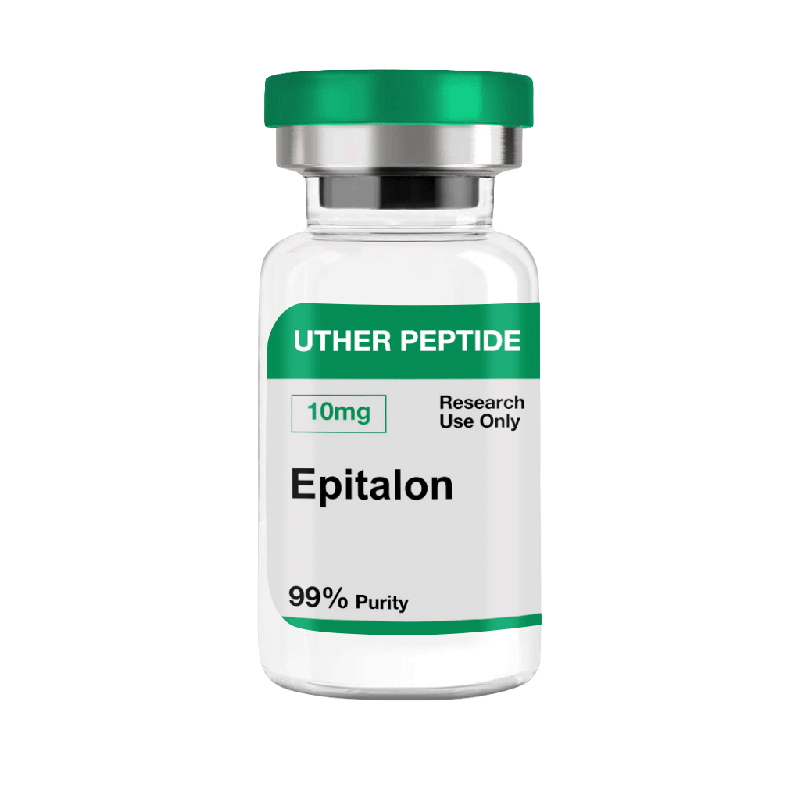
Epithalon is a synthetic tetrapeptide corresponding to a defined pineal-derived peptide sequence, developed for investigation of peptide-mediated nuclear and intracellular signalling in experimental systems.
The products offered on this website are furnished for in-vitro studies only. In-vitro studies are performed outside of the body. These products are not medicines or drugs and have not been approved to prevent, treat or cure any medical condition, ailment or disease. Bodily introduction of any kind into humans or animals is strictly forbidden.
 Cut off Times
Order before 15:00 for same day dispatch
 Delivery policy
Royal Mail Tracked 24
 Return policy
Moneyback guarantee
Synonyms / Designations: Epithalon, Epitalon, Ala–Glu–Asp–Gly, Epithalamin-derived tetrapeptide
CAS Number: 307297-39-8
Molecular Formula: C14H22N4O9
Molecular Weight: 390.35 g/mol
Peptide Sequence: Ala–Glu–Asp–Gly
Peptide Classification: Synthetic tetrapeptide; epithalamin-derived analogue
Purity: ≥ 99 % (HPLC, typical)
Appearance: White to off-white lyophilised powder
Pack Size: 10 mg (total)
Storage: Desiccated, protected from light, stored at –20 °C
Solubility: Soluble in water and buffered aqueous solutions
Epithalon is a synthetic tetrapeptide corresponding to a defined amino acid sequence originally identified as an active fragment of epithalamin, a peptide preparation derived from pineal tissue in early experimental studies. It was developed to provide a chemically well-characterised molecule suitable for controlled investigation of short peptide signalling in cellular and molecular research systems.
In biochemical and cellular research models, Epithalon has been examined for its interactions with nuclear and chromatin-associated processes, including modulation of gene expression and telomere-related regulatory mechanisms. Experimental studies have investigated its influence on chromatin structure, telomerase-associated activity, and intracellular signalling pathways, with observed effects dependent on concentration, exposure duration, and model system. Epithalon is used as a molecular research tool to explore peptide-mediated regulation rather than defined biological or clinical outcomes.
| Parameter | Typical Value / Range |
|---|---|
| Purity (HPLC) | ≥ 99 % |
| Appearance | White to off-white lyophilised powder |
| Molecular Weight | 390.35 g/mol |
| Peptide Type | Synthetic tetrapeptide |
| Solubility | Water, buffered aqueous solutions |
| Storage | –20 °C, desiccated, dark |
| Pack Size | 10 mg |
Khavinson V.Kh. et al. Epithalon peptide induces telomerase activity and telomere elongation in human somatic cells. Bulletin of Experimental Biology and Medicine, 2003.
https://pubmed.ncbi.nlm.nih.gov/12937682/
Anisimov V.N. et al. Epitalon increases telomere length in somatic cells. Advances in Gerontology, 2024.
https://pmc.ncbi.nlm.nih.gov/articles/PMC12411320/
Overview of Epitalon peptide research and mechanisms.
https://pmc.ncbi.nlm.nih.gov/articles/PMC11943447/
Keywords: Epithalon, Epitalon, Synthetic Tetrapeptide, Pineal Peptide Analogue
Your review appreciation cannot be sent
Report comment
Report sent
Your report cannot be sent
Write your review
Review sent
Your review cannot be sent
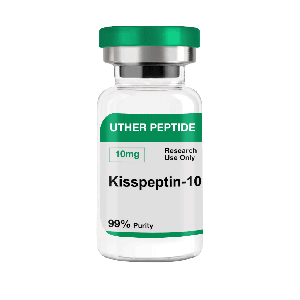
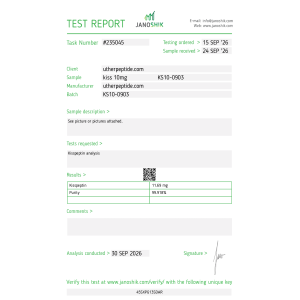
Reference: KISS10
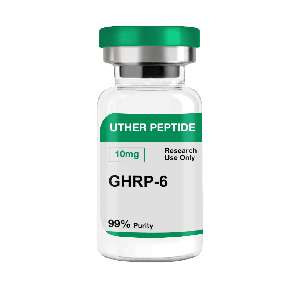
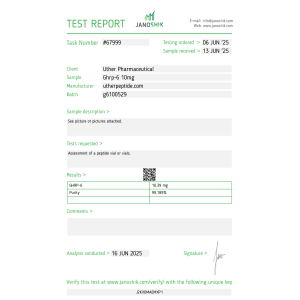
Reference: GHRP6
Reference: CRYSTA20
Reference: GHKCU50
Epithalon is a synthetic tetrapeptide corresponding to a defined pineal-derived peptide sequence, developed for investigation of peptide-mediated nuclear and intracellular signalling in experimental systems.
The products offered on this website are furnished for in-vitro studies only. In-vitro studies are performed outside of the body. These products are not medicines or drugs and have not been approved to prevent, treat or cure any medical condition, ailment or disease. Bodily introduction of any kind into humans or animals is strictly forbidden.
check_circle
check_circle