- New
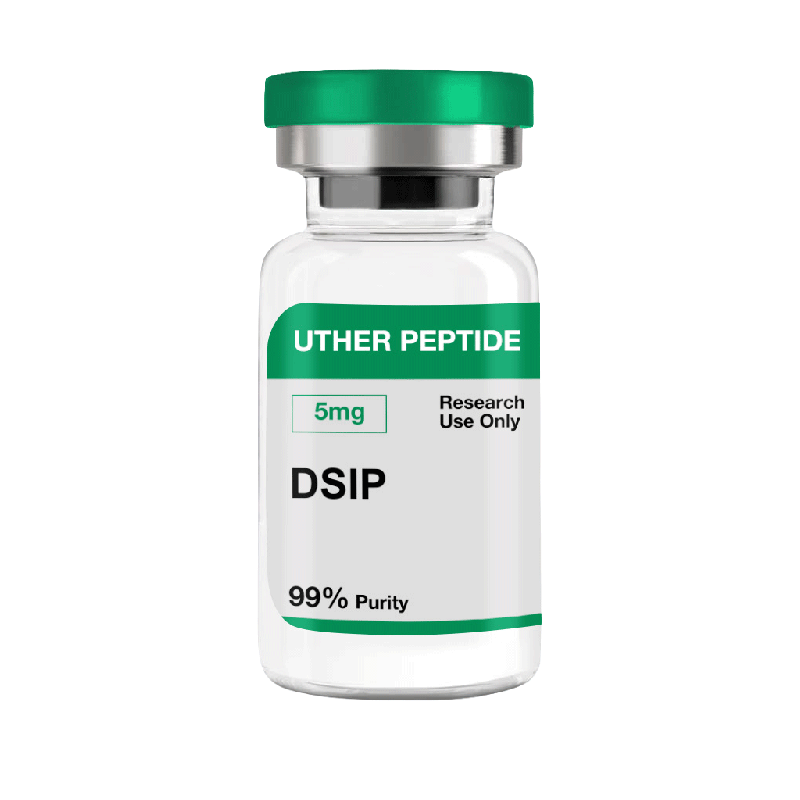
DSIP is a naturally occurring nonapeptide studied in experimental models as a neuropeptide associated with central nervous system signalling and neuroendocrine pathways.
The products offered on this website are furnished for in-vitro studies only. In-vitro studies are performed outside of the body. These products are not medicines or drugs and have not been approved to prevent, treat or cure any medical condition, ailment or disease. Bodily introduction of any kind into humans or animals is strictly forbidden.
 Cut off Times
Order before 15:00 for same day dispatch
 Delivery policy
Royal Mail Tracked 24
 Return policy
Moneyback guarantee
Synonyms / Designations: DSIP, Delta Sleep–Inducing Peptide, Delta sleep peptide
CAS Number: 62568-57-4
Molecular Formula: C₃₅H₄₈N₁₀O₁₅
Molecular Weight:~848.82 g/mol
Peptide Classification: Naturally occurring nonapeptide; classified as a neuropeptide in experimental models
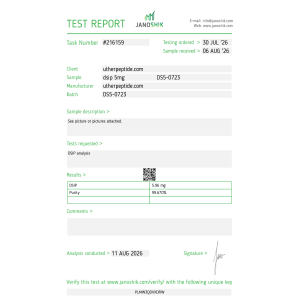
Purity: ≥ 99 % (HPLC, typical)
Appearance: White to off-white lyophilised powder
Pack Size: 5 mg (total)
Storage: Desiccated, protected from light, stored at –20 °C
Solubility: Soluble in water, dilute acetic acid, and phosphate-buffered saline (PBS)
Delta Sleep–Inducing Peptide (DSIP) is a naturally occurring nonapeptide first identified in studies of neurochemical signalling associated with sleep-related brain activity. It has been detected in central nervous system tissues, peripheral organs, and various biological fluids across multiple animal models, although its biosynthetic origin and precursor structure remain incompletely characterised.
In biochemical and cellular research systems, DSIP has been examined for its involvement in neuroendocrine signalling, stress-associated pathways, and peptide–receptor interactions. Experimental studies suggest that DSIP may interact with multiple signalling mechanisms, including NMDA receptor–related pathways and MAPK-associated signalling cascades, with observed effects dependent on concentration, exposure duration, and experimental context. DSIP is primarily utilised as a molecular tool to investigate neuropeptide signalling rather than defined physiological outcomes.
| Parameter | Typical Value / Range |
|---|---|
| Purity (HPLC) | ≥ 99 % |
| Appearance | White to off-white lyophilised powder |
| Molecular Weight | ~848.82 g/mol |
| Peptide Type | Synthetic nonapeptide |
| Solubility | Water, dilute acids, PBS |
| Storage | –20 °C, desiccated, dark |
| Pack Size | 5 mg |
Schneider-Helmert D., Schoenenberger G.A. Effects of DSIP in man. Multifunctional effects of a neuropeptide. Neuropsychobiology, 1983.
https://pubmed.ncbi.nlm.nih.gov/1299794/
Kovalzon V.M., Strekalova T.V. Delta sleep-inducing peptide (DSIP): a still unresolved riddle. Journal of Neurochemistry, 2006.
https://pubmed.ncbi.nlm.nih.gov/16539679/
Bocheva A. et al. DSIP and its analogues: potential neuroprotective research applications. Molecules, 2021.
https://www.mdpi.com/1420-3049/26/17/5173
Keywords: DSIP, Delta Sleep–Inducing Peptide, Synthetic Nonapeptide
Your review appreciation cannot be sent
Report comment
Report sent
Your report cannot be sent
Write your review
Review sent
Your review cannot be sent
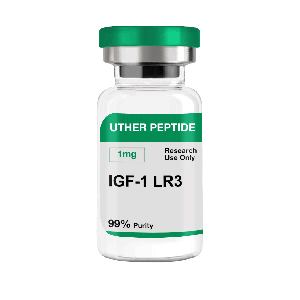
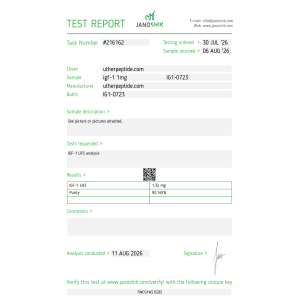
Reference: IGF1LR3
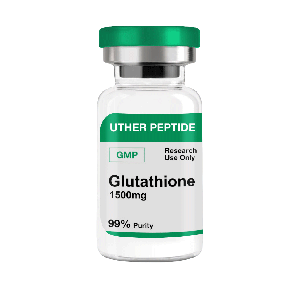
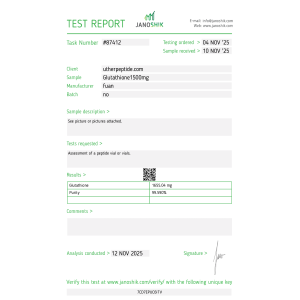
Reference: GLUT1500
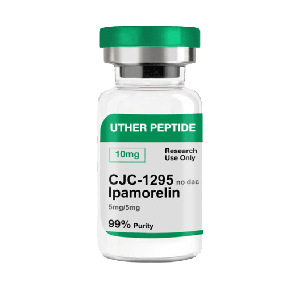
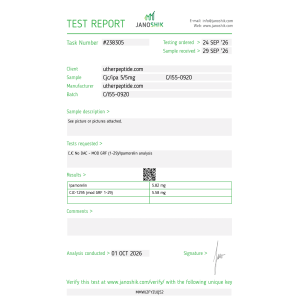
Reference: CJCIPA10
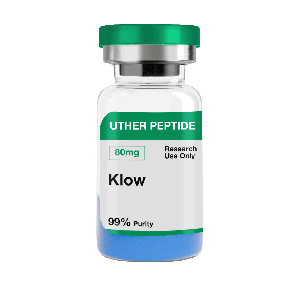
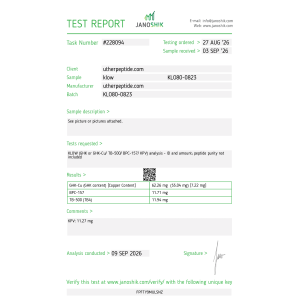
Reference: KLOW80
DSIP is a naturally occurring nonapeptide studied in experimental models as a neuropeptide associated with central nervous system signalling and neuroendocrine pathways.
The products offered on this website are furnished for in-vitro studies only. In-vitro studies are performed outside of the body. These products are not medicines or drugs and have not been approved to prevent, treat or cure any medical condition, ailment or disease. Bodily introduction of any kind into humans or animals is strictly forbidden.
check_circle
check_circle