- New
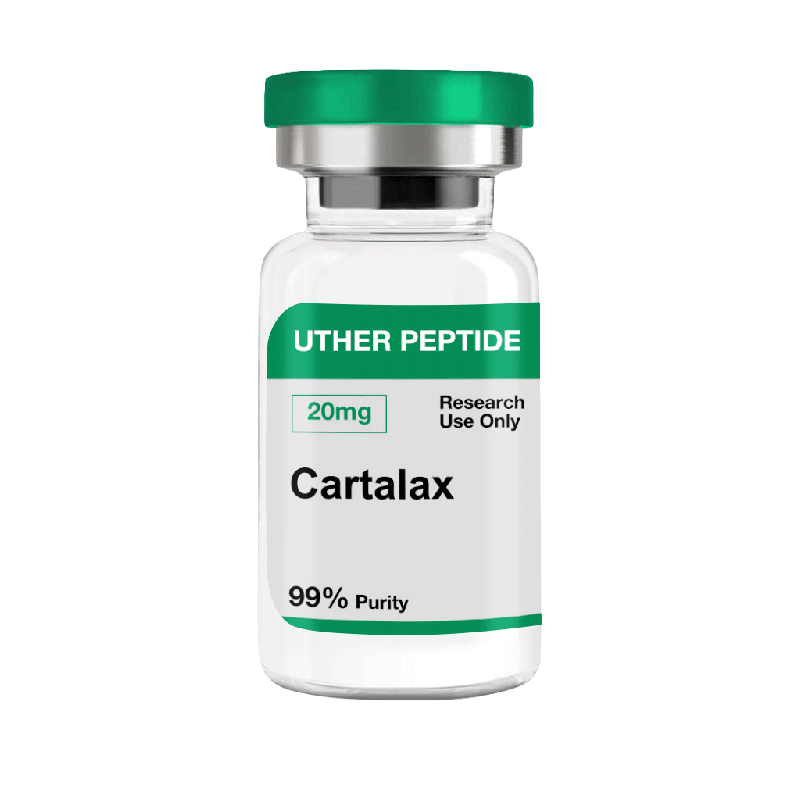
Cartalax is a synthetic tripeptide used as a research tool to investigate tissue-specific gene-expression regulation in cartilage and connective-tissue experimental systems.
The products offered on this website are furnished for in-vitro studies only. In-vitro studies are performed outside of the body. These products are not medicines or drugs and have not been approved to prevent, treat or cure any medical condition, ailment or disease. Bodily introduction of any kind into humans or animals is strictly forbidden.
 Cut off Times
Order before 15:00 for same day dispatch
 Delivery policy
Royal Mail Tracked 24
 Return policy
Moneyback guarantee
Synonyms / Designations: Cartalax; AED; cartilage / connective-tissue peptide bioregulator
Amino Acid Sequence: Ala-Glu-Asp (AED)
CAS Number: N/A
Molecular Formula: C12H19N3O8
Molecular Weight: 333.30 g/mol
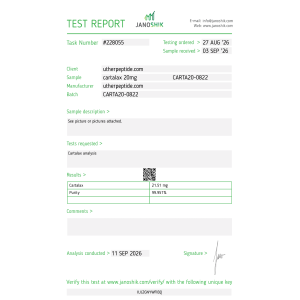
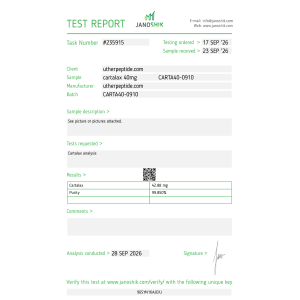
Purity: ≥ 99 % (HPLC)
Appearance: White to off-white lyophilised powder
Pack Size: 20 mg (total)
Storage: Desiccated, protected from light, stored at –20 °C or below
Solubility: Soluble in water and buffered aqueous solutions
Cartalax is a short synthetic tripeptide used as a molecular probe for studying tissue-specific gene regulation in cartilage and connective-tissue model systems. In chondrocyte and fibroblast cultures it has been used to examine effects on cell proliferation, apoptosis and expression of extracellular-matrix genes (e.g. type II collagen, aggrecan).
In molecular-docking work within the Khavinson model, the AED motif is assigned to a specific promoter site, supporting its use as a research probe for putative short-peptide / DNA-promoter interactions. It is studied as a candidate transcriptional regulator in experimental musculoskeletal systems; observed effects depend on concentration, model system and exposure conditions.
| Parameter | Typical Value / Range |
|---|---|
| Purity (HPLC) | ≥ 99 % |
| Appearance | White to off-white lyophilised powder |
| Molecular Weight | 333.30 g/mol |
| Peptide Type | Synthetic linear tripeptide bioregulator (Khavinson cytogen family) |
| Solubility | Water, buffered aqueous solutions |
| Storage | –20 °C, desiccated, dark |
| Pack Size | 20 mg (total) |
Khavinson VKh, Linkova NS, Tarnovskaya SI, et al. Short cell-penetrating peptides: a model of interactions with gene promoter sites. Bull Exp Biol Med.
https://pubmed.ncbi.nlm.nih.gov/23484211/
Short Peptides Regulate Gene Expression. Bull Exp Biol Med. 2016.
https://link.springer.com/article/10.1007/s10517-016-3596-7
Khavinson VKh, Popovich IG, et al. Peptide Regulation of Gene Expression: A Systematic Review. Molecules. 2021;26(22):7053.
https://www.mdpi.com/1420-3049/26/22/7053
Keywords: Cartalax, AED, cartilage peptide bioregulator, synthetic tripeptide
Your review appreciation cannot be sent
Report comment
Report sent
Your report cannot be sent
Write your review
Review sent
Your review cannot be sent
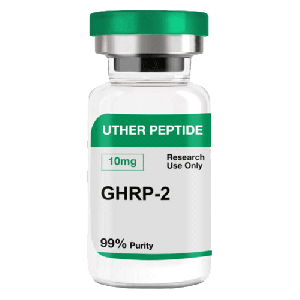
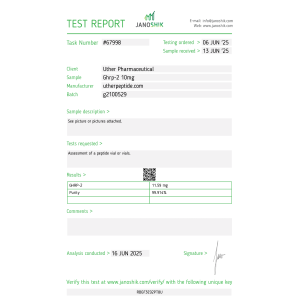
Reference: GHRP2
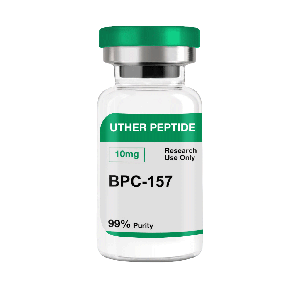
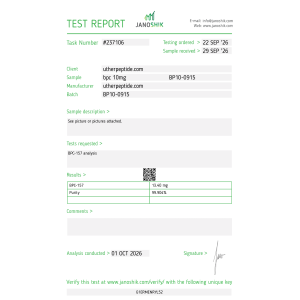
Reference: BPC15710
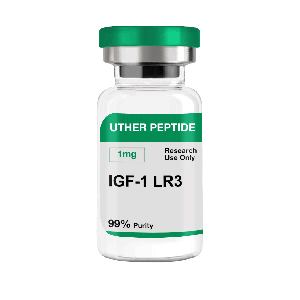
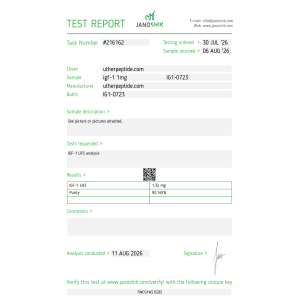
Reference: IGF1LR3
Cartalax is a synthetic tripeptide used as a research tool to investigate tissue-specific gene-expression regulation in cartilage and connective-tissue experimental systems.
The products offered on this website are furnished for in-vitro studies only. In-vitro studies are performed outside of the body. These products are not medicines or drugs and have not been approved to prevent, treat or cure any medical condition, ailment or disease. Bodily introduction of any kind into humans or animals is strictly forbidden.
check_circle
check_circle